GridView
A scrollable, 2D array of controls.
It is very effective for large lists (thousands of items).
Prefer it over wrapping Columns or
Rows for smooth scrolling.
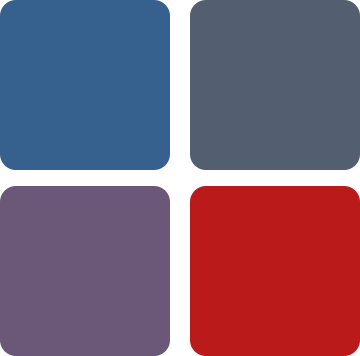
ft.GridView(
    width=180,
    runs_count=2,
    spacing=8,
    controls=[
        ft.Container(
            width=50, height=50, bgcolor=ft.Colors.PRIMARY, border_radius=8
        ),
        ft.Container(
            width=50, height=50, bgcolor=ft.Colors.SECONDARY, border_radius=8
        ),
        ft.Container(
            width=50, height=50, bgcolor=ft.Colors.TERTIARY, border_radius=8
        ),
        ft.Container(
            width=50, height=50, bgcolor=ft.Colors.ERROR, border_radius=8
        ),
    ],
)
Inherits: LayoutControl, ScrollableControl, AdaptiveControl
Properties
build_controls_on_demand- Whether grid children should be built lazily as they become visible.cache_extent- Items that fall in the cache area (area before or after the visible area that are about to become visible when the user scrolls) are laid out even though they are not (yet) visible on screen.child_aspect_ratio- The ratio of the cross-axis to the main-axis extent of each child.clip_behavior- The content will be clipped (or not) according to this option.controls- A list of controls to display inside grid.horizontal- Whether to layout the grid items horizontally.max_extent- The maximum width or height of the grid item.padding- The amount of space by which to inset the children.reverse- Whether the scroll view scrolls in the reading direction.run_spacing- The number of logical pixels between each child along the cross axis.runs_count- The number of children in the cross axis.semantic_child_count- The number of children that will contribute semantic information.spacing- The number of logical pixels between each child along the main axis.
Examples
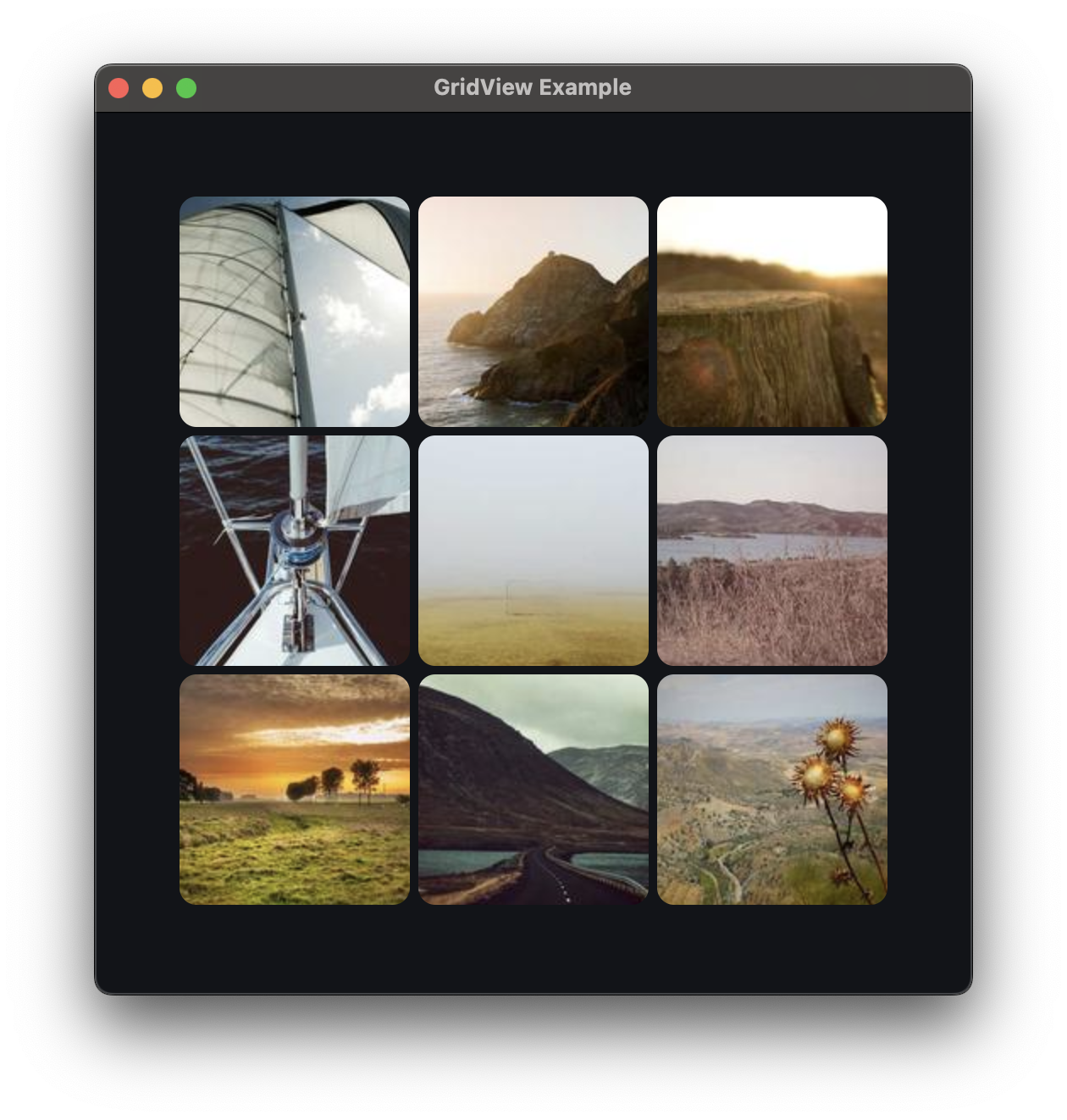
Photo gallery
import flet as ft


def main(page: ft.Page):
    page.title = "GridView Example"
    page.theme_mode = ft.ThemeMode.DARK
    page.padding = 50

    page.add(
        ft.SafeArea(
            expand=True,
            content=ft.GridView(
                expand=True,
                runs_count=5,
                max_extent=150,
                child_aspect_ratio=1.0,
                spacing=5,
                run_spacing=5,
                controls=[
                    ft.Image(
                        src=f"https://picsum.photos/150/150?{i}",
                        fit=ft.BoxFit.NONE,
                        repeat=ft.ImageRepeat.NO_REPEAT,
                        border_radius=ft.BorderRadius.all(10),
                    )
                    for i in range(0, 60)
                ],
            ),
        )
    )


if __name__ == "__main__":
    ft.run(main)
Properties
build_controls_on_demandclass-attributeinstance-attribute
build_controls_on_demand: bool = TrueWhether grid children should be built lazily as they become visible.
When True, the grid uses a builder-based implementation and creates child
controls on demand while scrolling. This is the recommended setting for large
collections.
When False, all child controls are built eagerly when the grid is built.
cache_extentclass-attributeinstance-attribute
cache_extent: Number | None = NoneItems that fall in the cache area (area before or after the visible area that are about to become visible when the user scrolls) are laid out even though they are not (yet) visible on screen.
The cacheExtent describes how many pixels the cache area extends before the leading edge and after the trailing edge of the viewport.
The total extent, which the viewport will try to cover with controls, is
cache_extent before the leading edge + extent of the main axis + cache_extent
after the trailing edge.
child_aspect_ratioclass-attributeinstance-attribute
child_aspect_ratio: Number = 1.0The ratio of the cross-axis to the main-axis extent of each child.
clip_behaviorclass-attributeinstance-attribute
clip_behavior: ClipBehavior = ClipBehavior.HARD_EDGEThe content will be clipped (or not) according to this option.
controlsclass-attributeinstance-attribute
controls: list[Control] = field(default_factory=list)A list of controls to display inside grid.
horizontalclass-attributeinstance-attribute
horizontal: bool = FalseWhether to layout the grid items horizontally.
max_extentclass-attributeinstance-attribute
max_extent: int | None = NoneThe maximum width or height of the grid item.
paddingclass-attributeinstance-attribute
padding: PaddingValue | None = NoneThe amount of space by which to inset the children.
reverseclass-attributeinstance-attribute
reverse: bool = FalseWhether the scroll view scrolls in the reading direction.
For example, if the reading direction is left-to-right and horizontal is True,
then the scroll view scrolls from left to right when reverse is False
and from right to left when reverse is True.
Similarly, if horizontal is False, then the scroll view scrolls from top
to bottom when reverse is False and from bottom to top when reverse is True.
run_spacingclass-attributeinstance-attribute
run_spacing: Number = 10The number of logical pixels between each child along the cross axis.
runs_countclass-attributeinstance-attribute
runs_count: int = 1The number of children in the cross axis.
semantic_child_countclass-attributeinstance-attribute
semantic_child_count: int | None = NoneThe number of children that will contribute semantic information.